Pledge
Voter Pledge
The commitment signed by individual voters in their state and district.
Document pending — supplied by the client

A civic education project
The figure cited from RAND Corporation research for cumulative income shifted away from American workers through 2023.
This website examines how economic productivity, wages, taxation and public policy have changed in the United States since 1975 — and presents a proposed Social Democracy framework, and a mutual pledge system, for public discussion.
Figure 01
Productivity vs. worker wages, 1975 →
The decoupling at the center of the argument. Full chart below.
Figure 02
Adjusted real minimum wage, 1975 →
Stagnation in the inflation-adjusted floor of American pay.
Why this website
Promises in modern elections are made and broken routinely. This project proposes something different: a written, mutual pledge between voters and the people who represent them, with a clear and agreed consequence — replacement in the next election cycle — if any element of the pledge is broken.
The organizing theme is Tax The One Percent. The purpose of this site is to explain the underlying economic record, define the political vocabulary accurately, and link candidates for Congress with the voters in their states and districts around one shared, verifiable commitment.
Define
The real differences between four often-confused systems
Document
The productivity, wage and tax record since 1975
Commit
A mutual, enforceable pledge between voter and candidate
The data
The argument rests on the historical record rather than rhetoric: what workers produced, and what workers were paid, beginning in 1975.
$84T
Cited from RAND Corporation research: the cumulative income shifted away from American workers through 2023 as pay separated from productivity.
Between the end of the post-war period and today, output per worker continued to climb while typical compensation flattened. The gap between those two lines, accumulated across five decades, is the number at the center of this project — and the reason the policy framework below begins with wages and taxation.
Figure 01 — Productivity and worker wages since 1975
Indexed to 1975 = 100. Illustrates the decoupling of productivity growth from typical worker compensation.
Placeholder chart — indexed shape only, awaiting the client's source files. Final figures to be drawn from the supplied research materials.
Figure 02 — Adjusted real minimum wage since 1975
Indexed to 1975 = 100. Illustrates stagnation and decline in inflation-adjusted minimum wage value.
Placeholder chart — indexed shape only, awaiting the client's source files. Final figures to be drawn from the supplied research materials.
Awaiting source files. The client's original productivity/wage and real-minimum-wage graphs, and their underlying citations, will replace these placeholders. No figures have been invented here.
Policy framework
Each pillar carries only the figures supplied by the project. Where detail is still to come, it is marked rather than filled in.
$26 / hr in 2026 → $30 / hr in 2030
A statutory wage floor set to restore purchasing power lost since 1975.
A federal minimum wage of $26 per hour in 2026, rising to $30 per hour in 2030. The figures are drawn directly from the project platform; the schedule between those two dates and any regional phase-in remain to be detailed in the client's expanded platform document.
Medicare + Medicaid + VA, combined
One national plan including vision, dental and prescription drug coverage.
Consolidation of Medicare, Medicaid and Veterans Affairs health systems into a single national healthcare plan that includes vision, dental and prescription drug coverage. Administrative structure and financing detail to be supplied from the client's platform materials.
Corporate · Individual · Capital gains · Wealth · Inheritance
Extremely aggressive restructuring across all five categories.
An extremely aggressive restructuring of corporate, individual, capital-gains, wealth and inheritance taxation. Specific rates, thresholds and brackets are defined in the client's platform documents and will be published here once supplied.
Budget surplus → rapid drawdown
Run a federal surplus and pay down the national debt on an accelerated schedule.
Revenue from the restructured tax system is directed first to a sustained federal budget surplus and then to a rapid drawdown of the national debt. Targets and timeline to be confirmed from the client's source materials.
Limited and audited to 2018 levels
Return defense spending to 2018 levels, subject to a completed audit.
Defense spending limited to 2018 levels, paired with a full and public audit of the department. The audit requirement is treated as a condition of the spending limit rather than a separate proposal.
Established as a public asset
A national fund holding public assets on behalf of citizens.
Establishment of a United States Sovereign Wealth Fund. Governance, funding sources and distribution rules are to be drawn from the client's expanded platform document.
Pledges & resources
Voters and candidates sign matching commitments. If any element of the pledge is broken, the agreed remedy is replacement of that Representative or Senator in the next election cycle.
The commitment signed by individual voters in their state and district.
Document pending — supplied by the client
The matching commitment signed by candidates for the House and Senate.
Document pending — supplied by the client
Bullet-point overview of the platform for quick reading and sharing.
Document pending — supplied by the client
The full background document covering each policy area in depth.
Document pending — supplied by the client
Materials prepared for press, organizers and partner organizations.
Document pending — supplied by the client
Where signed pledges by state, district and candidate will be published.
In development
The five PDF files prepared by the client could not be transferred through the intake form. These cards are placeholders with the correct structure — once the documents arrive, each card becomes a download and reading link. Nothing here paraphrases or invents their contents.
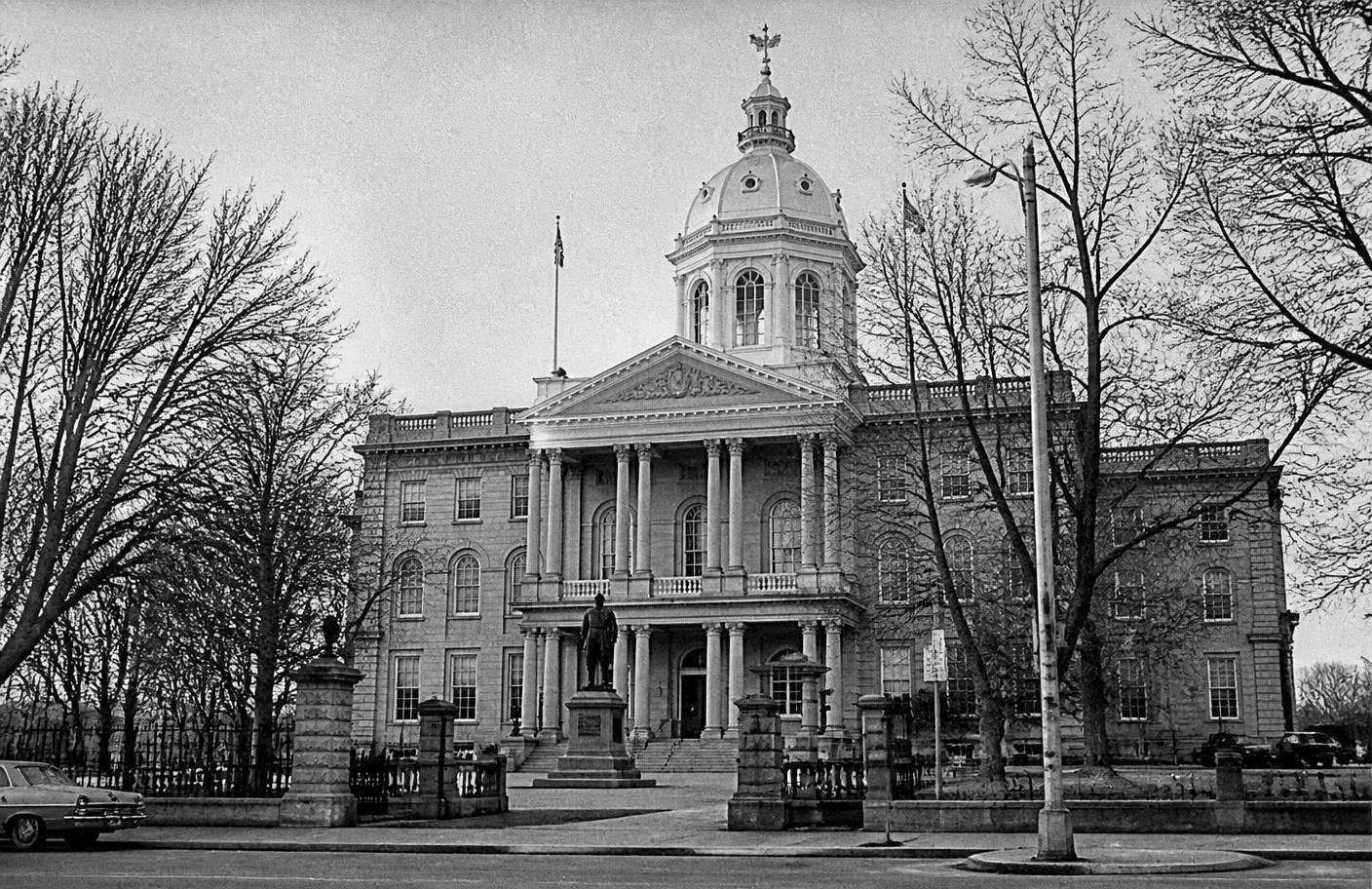
New Hampshire, 1973 – 2025
The model for this project is not theoretical. In New Hampshire, a mutual pledge given in gubernatorial races beginning in 1973 has been honored continuously for half a century.
1973
A mutual verbal pledge enters New Hampshire gubernatorial politics: no broad-based income tax and no broad-based sales tax.
1970s–80s
Taking the pledge shifts from an option to an expectation for serious candidates in the state's governor's races.
1990s–2000s
Across changing parties and economic conditions, the pledge continues to be given, and continues to hold.
2010s
Five decades in, the commitment functions as a genuine constraint rather than campaign language.
2025
The pledge remains in force through the 2025 election — an unbroken 50-year record of a promise kept.
1973
A mutual verbal pledge enters New Hampshire gubernatorial politics: no broad-based income tax and no broad-based sales tax.
1970s–80s
Taking the pledge shifts from an option to an expectation for serious candidates in the state's governor's races.
1990s–2000s
Across changing parties and economic conditions, the pledge continues to be given, and continues to hold.
2010s
Five decades in, the commitment functions as a genuine constraint rather than campaign language.
2025
The pledge remains in force through the 2025 election — an unbroken 50-year record of a promise kept.
If a verbal pledge can hold a state to its word for fifty years, a written and e-signed pledge — with a stated consequence — can hold a Congress to its word too.

1776 — 2026
250
The American Revolution was, at its core, an argument about who government answers to. Two hundred and fifty years later that argument has not been settled — it has only changed subject, from taxation without representation to representation without obligation.
The anniversary is offered here not as decoration but as a measure: a government of, by and for the people should be verifiable, and a promise made to voters should be binding.

About
Founder, Tax The One Percent.
David grew up in northern New Hampshire — a part of the country where town meeting is still a real institution and where a person's word carries weight. Watching the 1973 gubernatorial pledge hold across five decades left a lasting impression: a commitment made publicly, and enforced by voters rather than by courts, can outlast almost anything in politics.
That experience sits behind this project. Tax The One Percent applies the same mechanism at the federal level, around a different question: what happened to the $84 trillion in productivity gains that did not reach American workers, and what a Social Democracy framework would do about it.
How to participate
Review the voter and candidate commitments once published.
Pass the two-page summary to neighbors, groups and local candidates.
Work through the six policy pillars and the reasoning behind each.
Examine the productivity, wage and taxation record for yourself.
Tax The One Percent is organized as a non-profit with an associated Super PAC. A donation platform is being established — this button will link to it directly once the account is live.
FAQ
Where a question depends on documents not yet supplied, that is stated rather than guessed at.
Contact
For press inquiries, candidate pledge requests, or questions about the platform materials.
Definitions
What is Social Democracy — and what it is not.
These four terms are used interchangeably in American political argument. They describe very different systems. This project advocates the fourth.
Communism
A stateless, classless system in theory; in practice, single-party states with central control of production and no private ownership of capital.
Socialism
Public or collective ownership of the major means of production, with distribution decided through public rather than market institutions.
Democratic Socialism
Democratic government combined with the goal of transferring significant ownership of the economy to public or worker hands over time.
Social Democracy
A highly regulated capitalist economy. Private ownership and markets remain, paired with strong regulation, progressive taxation and broad social safety nets.
The model proposed here